
Food Access: Facts, Fears, and Possible Futures
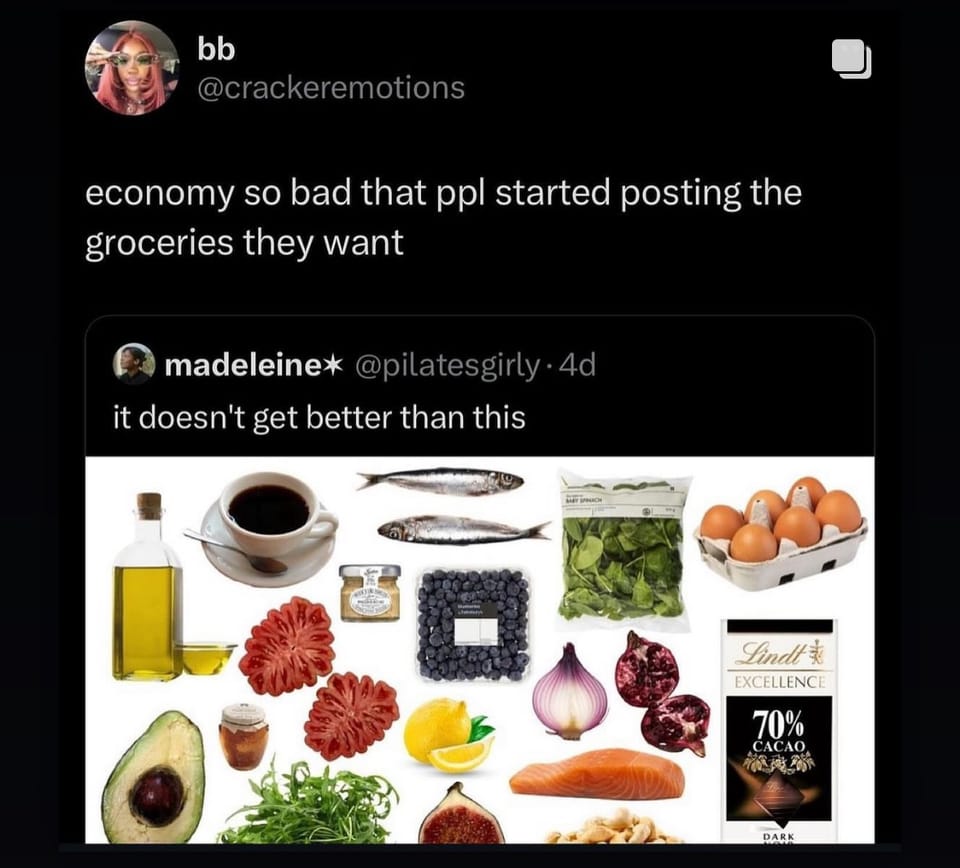
Facts and Figures
Earlier today, I learned about a link on CNN that tracks the average prices of a variety of staples within the United States (https://edition.cnn.com/2025/02/08/business/tracking-us-food-prices-eggs-dg/index.html).
This link is updated every month, and includes graphs for all of the items tracked that show the fluctuations in their prices since January of 2016. This can serve as a helpful tool for folks to check before going grocery shopping, especially in regard to what might be good things to stock up on versus things to maybe wait on.
The Wild Within Healing is a reader-supported publication. To receive new posts and support my work, consider becoming a free or paid subscriber.
Some items (rice, flour, cheese, spaghetti and macaroni, et al.) have been remarkably consistent. Others (eggs, coffee, potato chips, et al.) have gone up up up. Some have changed price in pretty steady ways, while others have been volatile with ups and downs.
All of the items cost more than they used to: in other words, whether volatile or steady, and whatever the degree of change has occurred, all prices are trending upward.
Fears
I am scared of what this means for individuals, communities, and our world as a whole.
The likelihood of decreased availability of programs including (but not limited to) food stamps is already terrifying.
The combination of that decreased availability of support with ever-rising food costs is heartbreaking.
The combination of decreased availability of support and ever-rising food costs with ever-more depleted topsoil and the ever-more widespread impacts of eco-despair/the global climate crises is, quite frankly, incomprehensible in its scope and potential impact.
One could say it is dystopian.
Because it is.
I let myself sit with those fears. I don’t immediately rush to push them away, because the fears are valid and real. Because denial won’t fill our stomachs.
And because facing the truth of things is a required step toward taking effective action in the direction of collective liberation.
If we don’t acknowledge what is happening and how we feel about it, we are preemptively denying ourselves the chance to find a skillful response.
And also… just as denial won’t fill our stomachs, neither will despair.
So what is a person to do?
Possible Futures
My knee-jerk response to these fears—perhaps it is yours, too—is to think about whether there are additional ways to adjust our household budget: i.e., how can we spend less and/or make more?
It’s undeniable that there are gifts to be found in those lines of questioning. I am a particular fan of finding ways to need to spend less money, versus ways of making more: as I wrote in a previous post, “It is always a good time to further divest ourselves from capitalism.”
I will certainly write about adjacent topics and ideas in the future, but that isn’t what I want to focus on now…
…precisely because the household-level focus of that line of questioning all too easily plays into the individualism that enables the current injustices in food systems throughout the United States to endure.
As long as we are solely focused on self-sufficiency, we will miss out on opportunities for building community resilience… and I guarantee you that community resilience offers a much better chance at building a better future than self-sufficiency ever will.
As a result, I am instead going to offer some quotations from some of the books I have read through the years. Each of these books contains wisdom related to food justice, community resilience, divestment from capitalism, and/or food access as a component of political resistance.
As a result, something to be found within these books is a source of hope without denial… one of the most transformative and powerful sources of resilience ever.
I will also be linking to non-Amazon options where each book can be purchased.
And please also keep your library in mind: whether your preferred reading method is e-book, audio book, or hard copy, your library is the first place to check!
(Books appear alphabetized by authors’ last names)
We Are Each Other’s Harvest: Celebrating African American Farmers, Land, and Legacy, Edited by Natalie Baszile
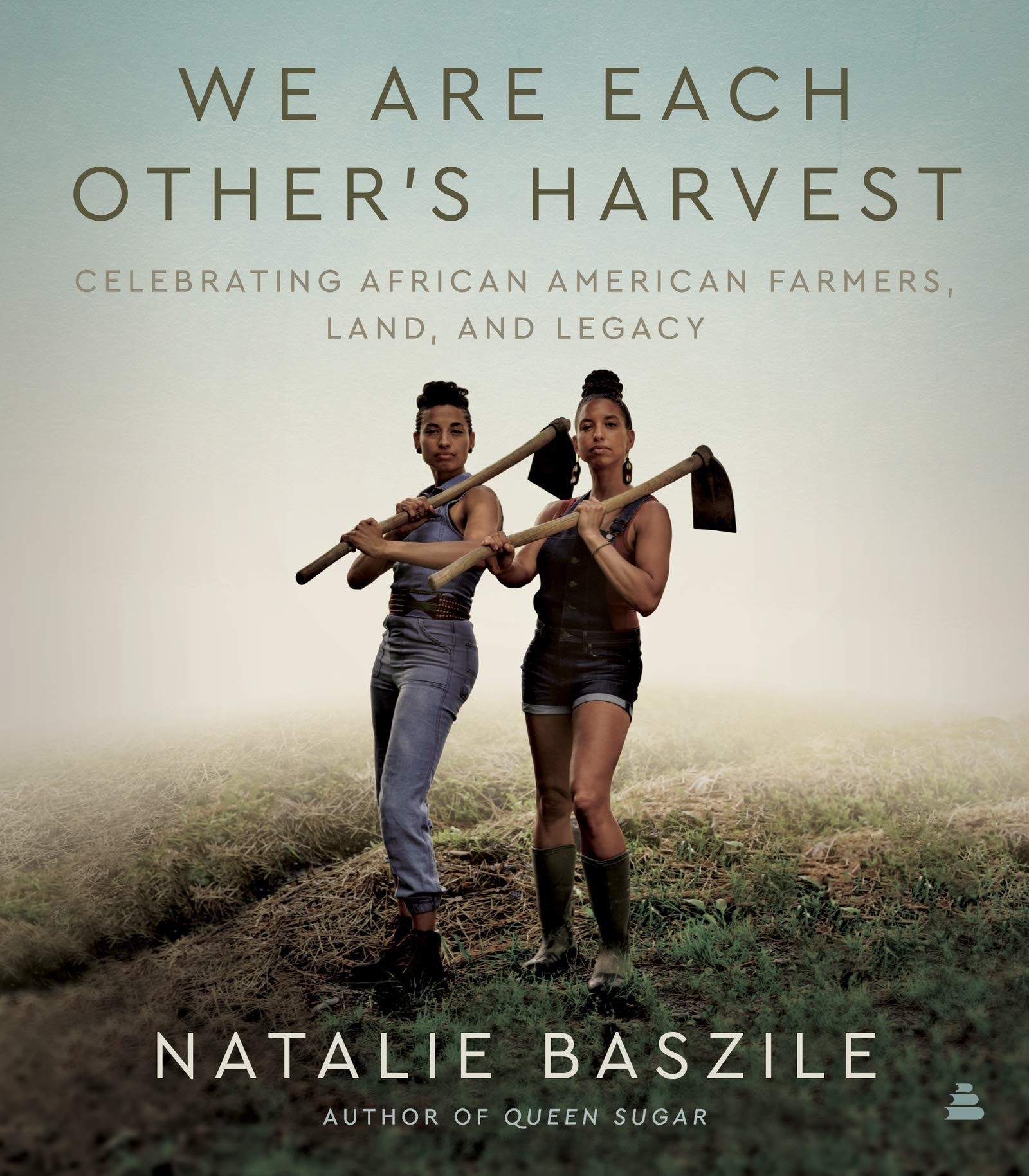
From Chapter 8, “Black to the Land,” by Leah Penniman
“Our ancestral grandmothers in the Dahomey region of West Africa braided seeds of okra, molokhia, and Levant cotton into their hair before being forced to board transatlantic slave ships. They hid sesame, black-eyed pea, rice, and melon seed in their locks. They stashed away Amara kale, gourd, sorrel, basil, tamarind, and kola in their tresses. The seed was their most precious legacy, and they believed against odds in a future of tilling and reaping the earth. They believed that we, Black descendants, would exist and that we would receive and honor the gift of the seed….
“Sustainable farming lived at the intersection of my passionate love for the earth and my commitment to social justice. I could tend the earth and feed my people….
“It is no accident that 98 percent of the rural land is owned by white people, that Black farmers comprise only 1.5 percent of the farmers, and that our people are more likely to suffer from diet-related illnesses and hunger. Reparations are due for a history of enslavement, dispossession, and discrimination….
“We will not let the colonizers rob us of our right to belong to the earth and to have agency in the food system…. We belong here, bare feet planted firmly on the land, hands calloused with the work of sustaining and nourishing our community.”
Black Food Geographies: Race, Self-Reliance, and Food Access in Washington, D.C. by Ashanté M. Reese
“Where do we go when we put food in the context of Black liberation?
“I do not pretend to know the answers to this question. What is clear, however, is that the global food regime, one in which components of our food system are in the hands of a few corporations, is not healthy for any of us. Within food, within the places where we purchase it, and within our consumption, we reproduce power structures that undergird the food inequalities highlighted in this book. We, too, have the power to resist those power structures. Black people across time and space have tried to manage and combat the amount of harm those structures have done. Some marginal success is seen through Mr. Parker’s store, the garden, and the ability to meet their food needs. That is what this book offers: a glimpse into what this self-reliance means to residents, and perhaps it opens doors for thinking about self-reliance as a strategy for coalition and institution building. Though this book is not about institutions of organizations, I come back to them as a necessary strategy moving forward, because food is never just about food. Neither is it solely about individual consumption.”
Other Avenues Are Possible: Legacy of the People’s Food System of the San Francisco Bay Area by Shanta Nimbark Sacharoff
“In addition to sharing the work of communally buying and dividing up the food, Food Conspiracy members organized social gatherings and food-related events. On the weekly food-ordering day, everyone brought food to share with our neighborhood Haight-Ashbury Food Conspiracy. Over potluck dinners we—women from many cultures—identified community needs and organized political actions in the neighborhood.
“We discussed the problem of growing world hunger and what we could do to help, while building our own community….
“During the period of the mid-1970s when a section of the leadership of the People’s Food System increasingly focused on a bigger revolutionary picture, most of the women I worked with maintained a more grassroots support network. For us, the personal remained political; our network consisted of child-care co-ops, home-study classes, and women’s groups. Food distribution and food sharing was the thread that held us together.”
Food Justice Now! Deepening the Roots of Social Struggle by Joshua Sbicca
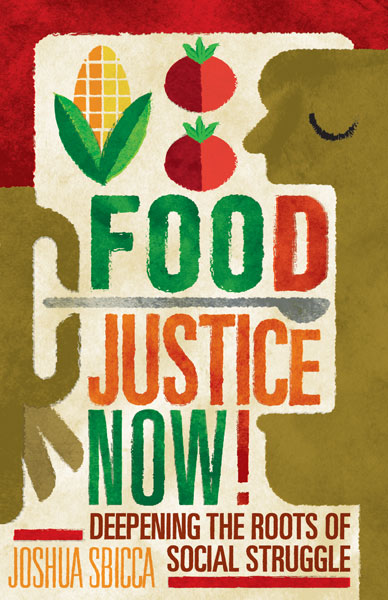
“[S]olidarity is both an outcome of the configuration of institutional, organizational, and activist demographics and the condition for reconfiguring these relations in more socially just ways. While food can be a site of division, it can also forge solidarity across social boundaries. There is nothing inherent to food that makes bridge-building possible, but when activism engages reflexively with its context, it can inspire new political practices. Acting intentionally is part of what facilitates learning about the most pressing social inequities. Then it is possible to speak out for food justice and form the alliances that can create change. To forge solidarity across differences requires staying open to conflict and messy deliberation and working to identify commonalities. The very diversity of problems in the food system* compels solidaristic food politics.”
*[including oppressive labor practices, dehumanizing federal immigration policies and practices wielded against farm workers, as well as the increased reliance of the factory farm industry on the legalized slavery of the U.S. prison system]
From University of Minnesota Press
Good Food, Strong Communities: Promoting Social Justice through Local and Regional Food Systems, Edited by Steve Ventura and Martin Bailkey
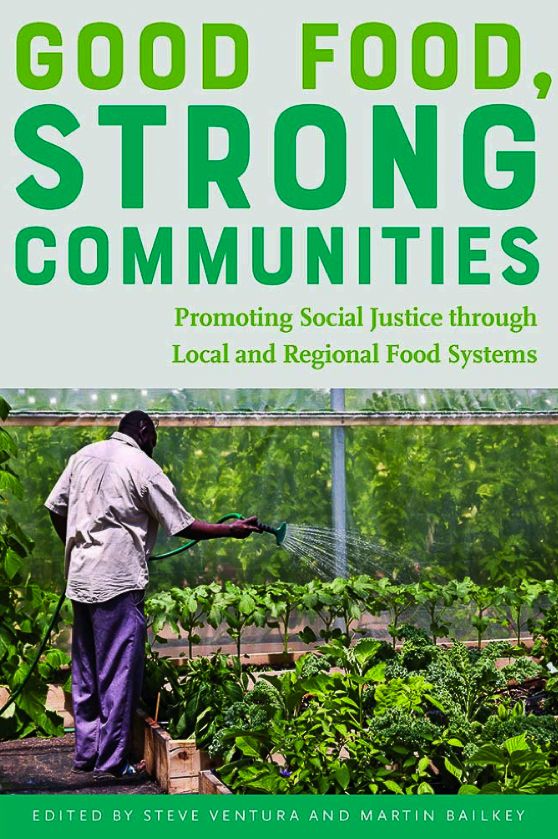
“The concept of food sovereignty can be linked to that of community self-determination—specifically, the opportunity for any community, particularly one with few resources, to free itself from outside control over how and what it eats every day….
“With its roots in peasant and worker movements of the global South, food sovereignty is linked to community food security through the shared political dimensions of these groups, and thus by necessity it involves social activism. Social empowerment is achieved by organizing time, resources, and passions around food production, access, and consumption. The breadth of alternative food system activities results in a similar range of food sovereignty examples— from tiny ‘guerilla gardens’ on vacant urban land to La Via Campesina, the global movement of peasants, migrants, landless people, and small- to medium-scale farmers operating through more than 160 organizations in seventy countries…. [F]ood sovereignty actions can reveal and address the power differentials exhibited through the everyday presence of discrimination, racism, and environmental injustice in the global food system.”
Freedom Farmers: Agricultural Resistance and the Black Freedom Movement by Monica M. White
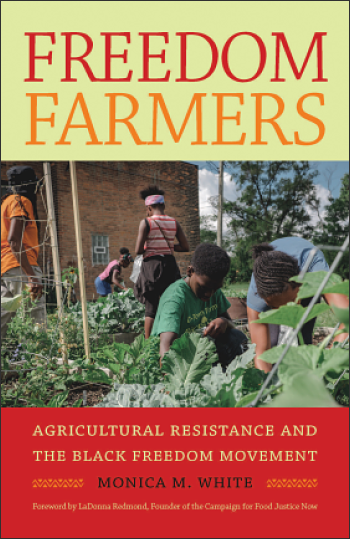
“As a political organization by and for black people (although it was open to farmers of any race), Freedom Farm brought [Fannie Lou] Hamer’s insight to life. By pooling resources, the community was designed to become self-sufficient and therefore able to resist political, social, and economic disenfranchisement and the pressure to relocate to the North. The organization sought to realize Hamer’s vision of economic participation as the path to political participation, based on her organic intellectual understanding of the means of oppression of the people of Sunflower County. By providing housing, health care, employment, education, and access to healthy food that the white power structure of rural Mississippi denied them, Freedom Farm provided a sphere for the development of a free mind, an opportunity to create new identities, and a new form of collective political consciousness.”
Start writing today. Use the button below to create a Substack of your own!
The Wild Within Healing is a reader-supported publication. To receive new posts and support my work, consider becoming a free or paid subscriber.


Comments ()